THE LONGSHIPS
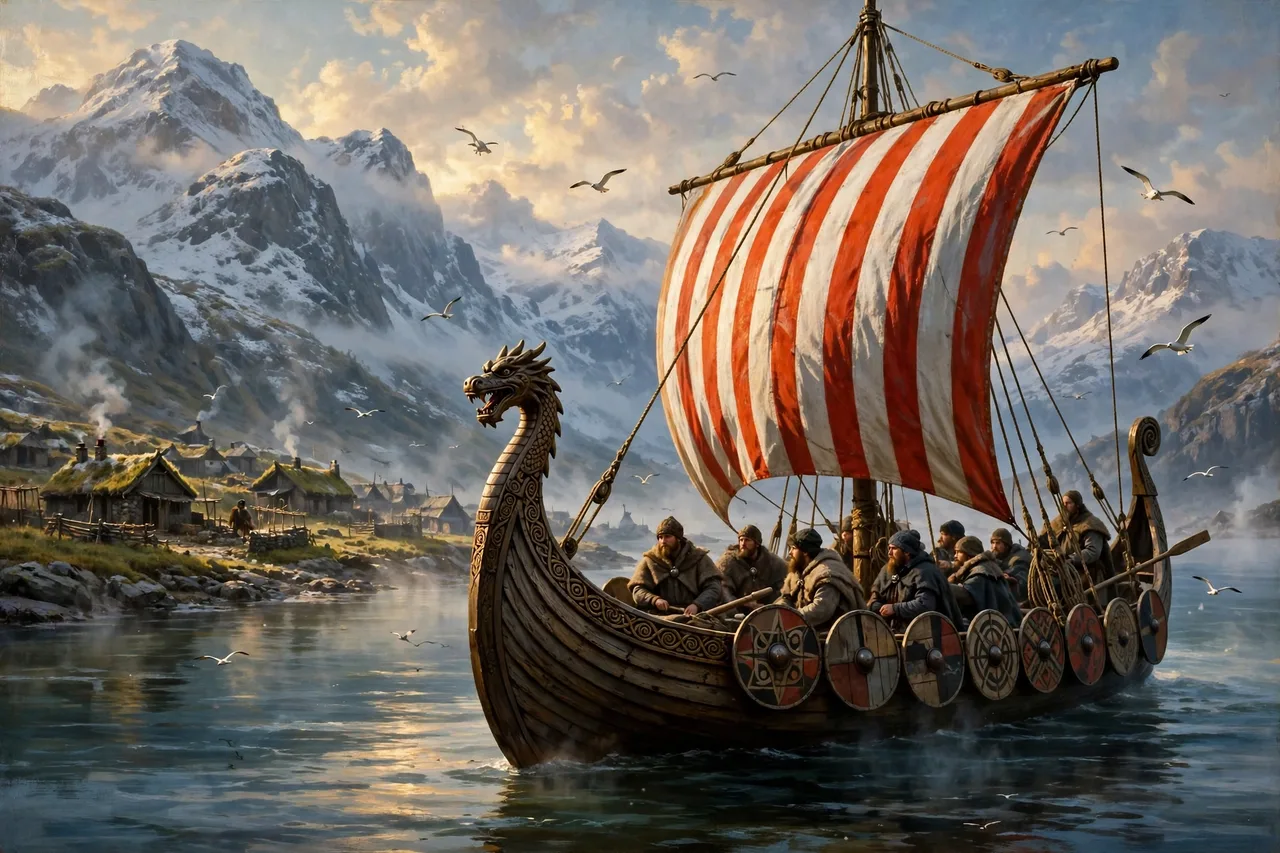
From the fjords of Norway, Denmark, and Sweden, the Norse took to the sea in longships — shallow-hulled, swift, able to sail up rivers and land on any beach. The carved dragon at the prow was set to ward the land-spirits; the striped wool sail and the painted round shields along the rail were the North’s own heraldry. One plain truth this house will always tell: the Vikings wore no horned helmets — that costume was invented by a nineteenth-century opera stage. Their real helmets were plain iron and leather.
RAIDERS, TRADERS, FARMERS
The age opens in fire — the raid on the monastery at Lindisfarne in 793 — and it widens into trade, settlement, and law: Dublin, York, Normandy (named for the Northmen), Iceland, Greenland, and, about the year 1000, Leif Erikson’s landing in North America, five centuries before Columbus. The same people who terrified Europe’s coasts also wrote sagas, kept assemblies, and farmed some of the hardest land on earth.
THE FAITH COMES NORTH
Missionaries carried the Gospel into Scandinavia — Ansgar, called the Apostle of the North, in the 800s; kings like Olaf Haraldsson of Norway in the 1000s. Within a few generations the raiders’ grandchildren were raising stone churches and carving crosses beside the old runes. The age is reckoned to close in 1066 — and by then the North belonged to Christendom, and its sailors’ maps belonged to the world.