Twelve men, honored as men — not marble. Each entry carries a life in brief, his accomplishments and deeds, and HIS HOPES FOR THE FUTURE in his own documented words, quoted from the primary record with its source named. Where the record holds complexity — and with these men it does, for several of them held other human beings in bondage while writing of liberty — the entry states it plainly, in the same size type as the praise. That is what honoring the truth means; the author of this book holds that a nation old enough to look at its whole record is the only kind worth being.
George Washington (1732–1799)
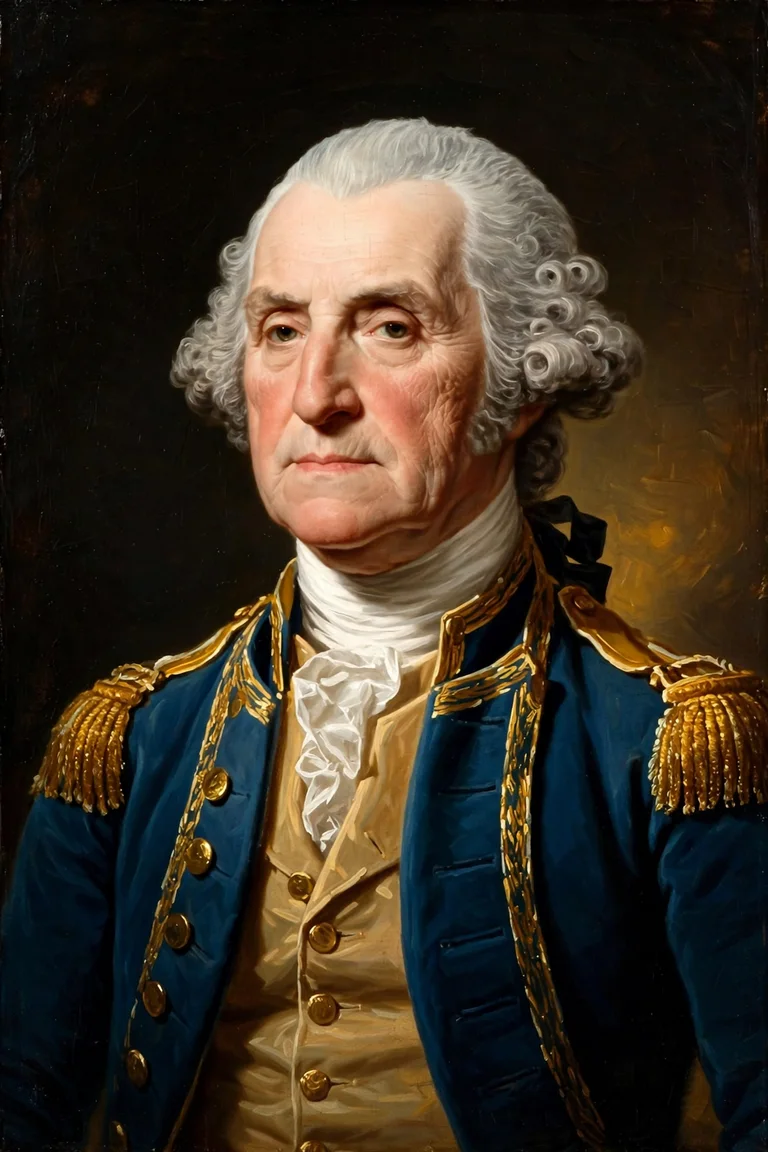
🖼️ HOUSE PAINTING — GEORGE WASHINGTON · An original Eternity Visions™ painting honoring the man — not a copy of any period portrait.
LIFE IN BRIEF
George Washington was born on February 22, 1732, in Westmoreland County, Virginia, the eldest son of Augustine Washington’s second marriage. He had little formal schooling and trained himself in mathematics and surveying, receiving a surveyor’s commission from the College of William and Mary in 1749. He served as a Virginia militia officer in the French and Indian War, sat in the House of Burgesses, and in 1759 married Martha Dandridge Custis, settling at Mount Vernon. Virginia sent him to both Continental Congresses, and in June 1775 Congress chose him to command the Continental Army. After the war he presided over the Constitutional Convention of 1787 and served as the first President of the United States, from 1789 to 1797. He died at Mount Vernon on December 14, 1799.
ACCOMPLISHMENTS & DEEDS
Washington held the Continental Army together through eight years of war, crossing the Delaware to win at Trenton in December 1776, enduring Valley Forge, and, with French allies, trapping Cornwallis at Yorktown in 1781. In 1783 he quelled unrest among his officers at Newburgh and resigned his commission to Congress, returning power to civil hands. He presided over the Constitutional Convention, then as President set lasting precedents: a cabinet, two terms, and a peaceful transfer of power in 1797. His will freed the enslaved people he owned outright, yet the plain truth stands — for most of his life he held men, women, and children in bondage at Mount Vernon, and their labor built his estate.
HIS HOPES FOR THE FUTURE
In his Farewell Address, published September 19, 1796, Washington left his hope for the Republic as a prayer for its people:
“Profoundly penetrated with this idea, I shall carry it with me to my grave, as a strong incitement to unceasing vows that Heaven may continue to you the choicest tokens of its beneficence; that your Union and brotherly affection may be perpetual; that the free constitution, which is the work of your hands, may be sacredly maintained.”
Source: Farewell Address, 1796, verified at Founders Online, National Archives.
John Adams (1735–1826)
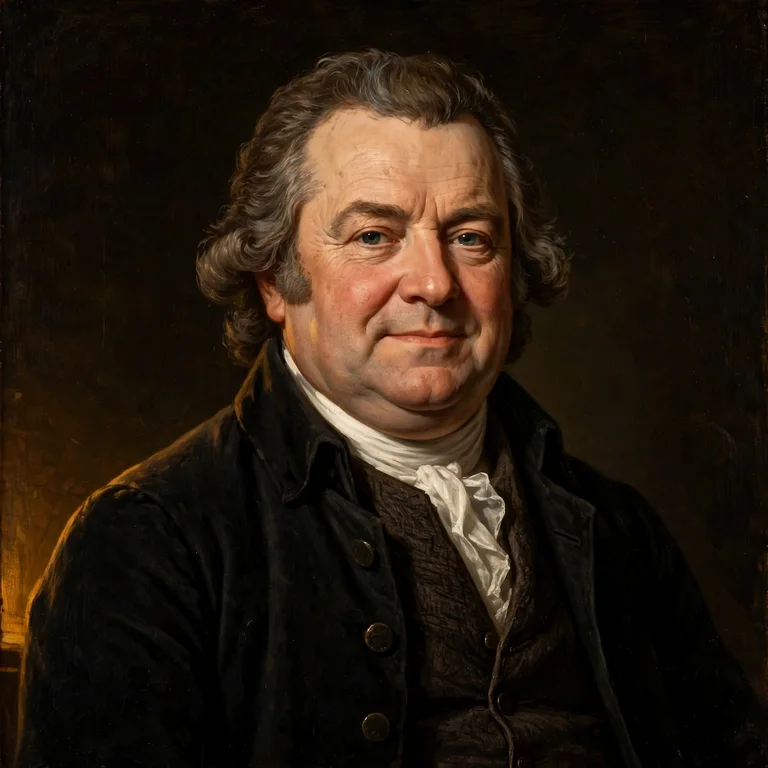
🖼️ HOUSE PAINTING — JOHN ADAMS · An original Eternity Visions™ painting honoring the man — not a copy of any period portrait.
LIFE IN BRIEF
John Adams was born on October 30, 1735, in Braintree (now Quincy), Massachusetts, the son of a farmer and deacon. He graduated from Harvard College in 1755, taught school, then read law and built a respected practice in Boston. In 1764 he married Abigail Smith, his lifelong correspondent and adviser. Massachusetts sent him to both Continental Congresses, where he became a leading voice for independence, and he later served as an American diplomat in France, the Netherlands, and Britain. He was the first Vice President of the United States, from 1789 to 1797, and the second President, from 1797 to 1801. Retiring to Quincy, he died there on July 4, 1826 — the fiftieth anniversary of independence, and the same day as Thomas Jefferson.
ACCOMPLISHMENTS & DEEDS
Adams defended British soldiers after the Boston Massacre in 1770, holding that every man deserved counsel and a fair trial. In Congress he nominated Washington to command the army, served on the committee that drafted the Declaration of Independence, and argued independence through to the vote. In 1779 he wrote most of the Massachusetts Constitution of 1780, the oldest written constitution still in use. As a diplomat he helped negotiate the Treaty of Paris that ended the war in 1783, and as President he kept the young nation out of a full war with France during the Quasi-War. Unlike most founders here, he never held an enslaved person.
HIS HOPES FOR THE FUTURE
Writing to Abigail in the hard spring of 1777, Adams spoke straight to the generations who would inherit what his generation was buying at such cost:
“Posterity! You will never know, how much it cost the present Generation, to preserve your Freedom! I hope you will make a good Use of it. If you do not, I shall repent in Heaven, that I ever took half the Pains to preserve it.”
Source: John Adams to Abigail Adams, 26 April 1777, verified at Founders Online, National Archives.
Thomas Jefferson (1743–1826)
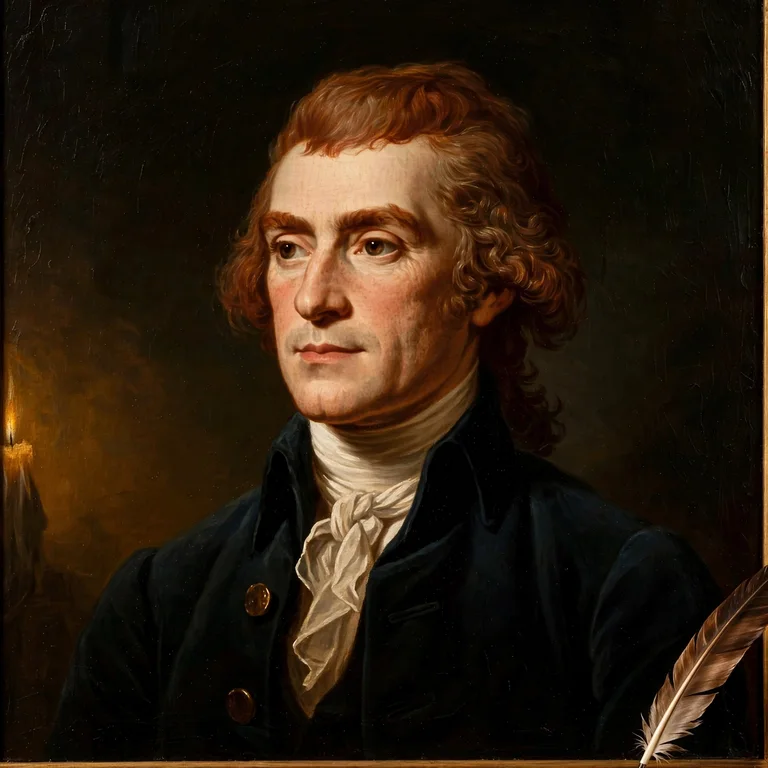
🖼️ HOUSE PAINTING — THOMAS JEFFERSON · An original Eternity Visions™ painting honoring the man — not a copy of any period portrait.
LIFE IN BRIEF
Thomas Jefferson was born on April 13, 1743, at Shadwell in Albemarle County, Virginia, the son of planter Peter Jefferson and Jane Randolph Jefferson. He studied at the College of William and Mary, read law, and was admitted to the bar in 1767. He sat in the House of Burgesses, married Martha Wayles Skelton in 1772, and built Monticello on his mountaintop nearby. Virginia sent him to the Second Continental Congress, and later he served as governor of Virginia, minister to France, Secretary of State, and Vice President. He was the third President of the United States, from 1801 to 1809. He died at Monticello on July 4, 1826, hours before John Adams.
ACCOMPLISHMENTS & DEEDS
Jefferson was the principal author of the Declaration of Independence in 1776, writing the words by which the nation still measures itself. In Virginia he wrote the Statute for Religious Freedom, enacted in 1786, and as President he completed the Louisiana Purchase of 1803, doubling the nation’s size, and sent Lewis and Clark to explore it. He founded the University of Virginia and designed its buildings. The honest record must also stand plain: Jefferson held more than six hundred people in slavery across his lifetime, including Sally Hemings and her children, and the liberty he proclaimed was denied at his own home.
HIS HOPES FOR THE FUTURE
In his First Inaugural Address, on March 4, 1801, after a bitter election, Jefferson refused to abandon the experiment and called the young government the world’s best hope:
“But would the honest patriot, in the full tide of successful experiment, abandon a government which has so far kept us free and firm on the theoretic and visionary fear that this Government, the world’s best hope, may by possibility want energy to preserve itself? I trust not.”
Source: First Inaugural Address, 1801, verified at the Avalon Project, Yale Law School.
James Madison (1751–1836)
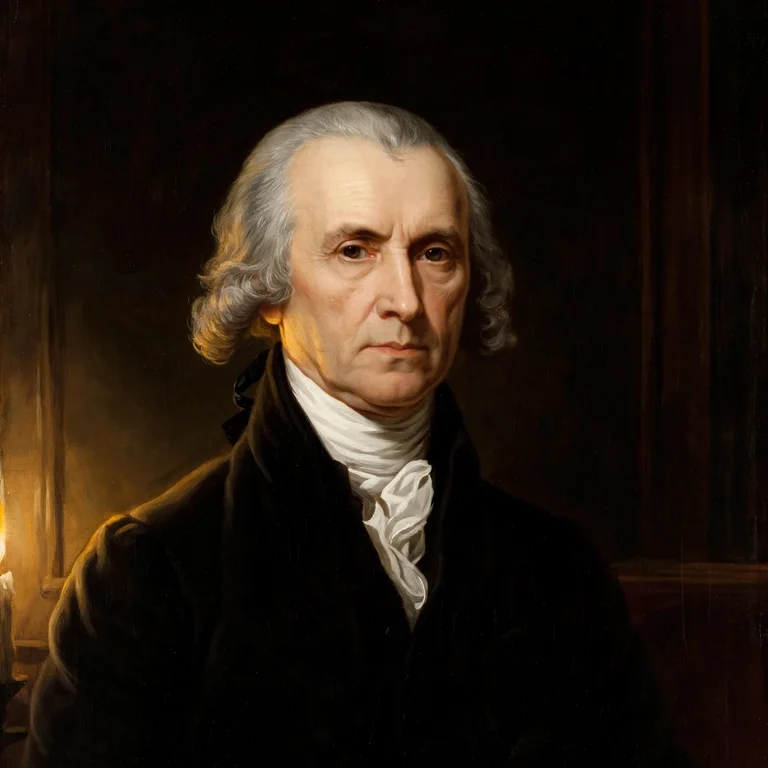
🖼️ HOUSE PAINTING — JAMES MADISON · An original Eternity Visions™ painting honoring the man — not a copy of any period portrait.
LIFE IN BRIEF
James Madison was born on March 16, 1751, at Belle Grove near Port Conway, Virginia, the eldest son of planter James Madison Sr. and Nelly Conway Madison, and grew up at Montpelier in Orange County. He graduated from the College of New Jersey (now Princeton) in 1771. Frail health kept him from soldiering, but he served in the Virginia legislature and the Continental Congress while still in his twenties. In 1794 he married Dolley Payne Todd. He went on to serve in the United States House of Representatives, as Secretary of State under Jefferson, and as the fourth President of the United States, from 1809 to 1817. He died at Montpelier on June 28, 1836, the last surviving signer of the Constitution.
ACCOMPLISHMENTS & DEEDS
Madison came to Philadelphia in 1787 with the Virginia Plan in hand and spoke more than any other delegate; his notes remain the fullest record of the Constitutional Convention, and he is honored as the Father of the Constitution. With Hamilton and Jay he wrote The Federalist, and in the first Congress he shepherded the Bill of Rights into the Constitution. As President he led the nation through the War of 1812. Yet the true record includes this: Madison held people in slavery at Montpelier all his life, depended on their labor, and freed none of them in his will.
HIS HOPES FOR THE FUTURE
In The Federalist No. 14, published November 30, 1787, Madison praised the boldness of the founding and charged those who came after to carry the work forward:
“Happily for America, happily we trust for the whole human race, they pursued a new and more noble course. They accomplished a revolution which has no parallel in the annals of human society: They reared the fabrics of governments which have no model on the face of the globe. They formed the design of a great confederacy, which it is incumbent on their successors to improve and perpetuate.”
Source: The Federalist No. 14, 1787, verified at Founders Online, National Archives.
Benjamin Franklin (1706–1790)
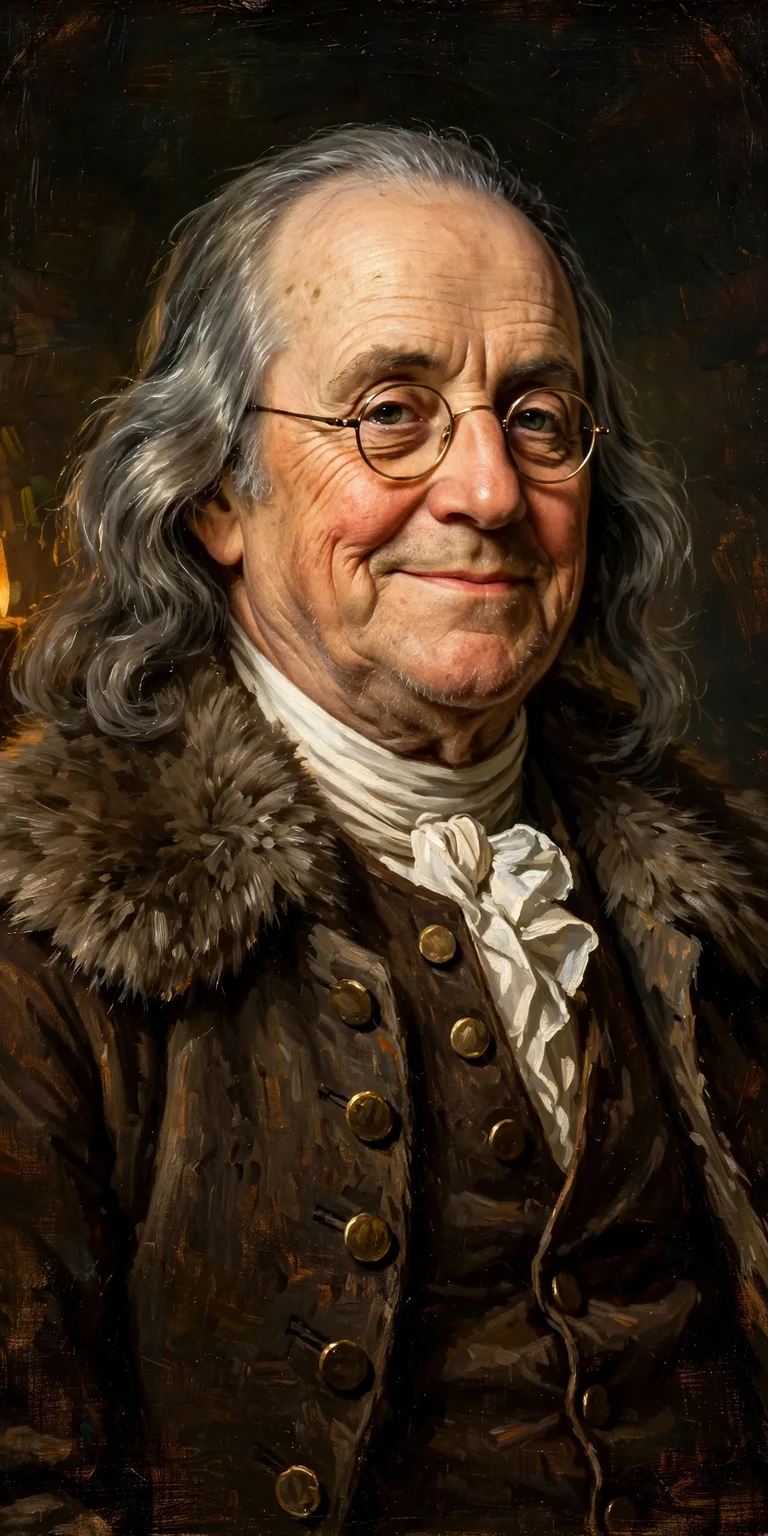
🖼️ HOUSE PAINTING — BENJAMIN FRANKLIN · An original Eternity Visions™ painting honoring the man — not a copy of any period portrait.
LIFE IN BRIEF
Benjamin Franklin was born on January 17, 1706, in Boston, Massachusetts, the son of candle-maker Josiah Franklin. Apprenticed to his brother’s print shop at twelve, he ran away to Philadelphia at seventeen and built a printing fortune that let him retire from business at forty-two. He helped found a library, a fire company, an academy that became the University of Pennsylvania, and a hospital. Pennsylvania sent him to London as its agent, then to the Continental Congress, and in 1776 to France as minister. In his eighties he served as president of Pennsylvania and as the oldest delegate to the Constitutional Convention. He died in Philadelphia on April 17, 1790.
ACCOMPLISHMENTS & DEEDS
Franklin’s electrical experiments, published in 1751, made him the most famous American in the world, and he gave the young nation the lightning rod, bifocals, and the Franklin stove. As a statesman he helped draft and signed the Declaration of Independence, won the French alliance of 1778 that made victory possible, and helped negotiate the peace of 1783. At the Constitutional Convention his calls for prayer and compromise helped hold the delegates together. Honesty requires the rest: in his early life Franklin held enslaved people and printed advertisements for slave sales, though he came in his last years to preside over Pennsylvania’s abolition society and petition Congress against slavery.
HIS HOPES FOR THE FUTURE
On September 17, 1787, as the last members signed the Constitution, Madison recorded Franklin looking toward the sun carved on the back of Washington’s chair and saying, to a few members near him:
“I have often and often in the course of the Session, and the vicissitudes of my hopes and fears as to its issue, looked at that behind the President without being able to tell whether it was rising or setting: But now at length I have the happiness to know that it is a rising and not a setting Sun.”
Source: Remark at the signing of the Constitution, 17 September 1787, as recorded in Madison’s Notes of the Convention, verified at the Avalon Project, Yale Law School.
Alexander Hamilton (1755–1804)
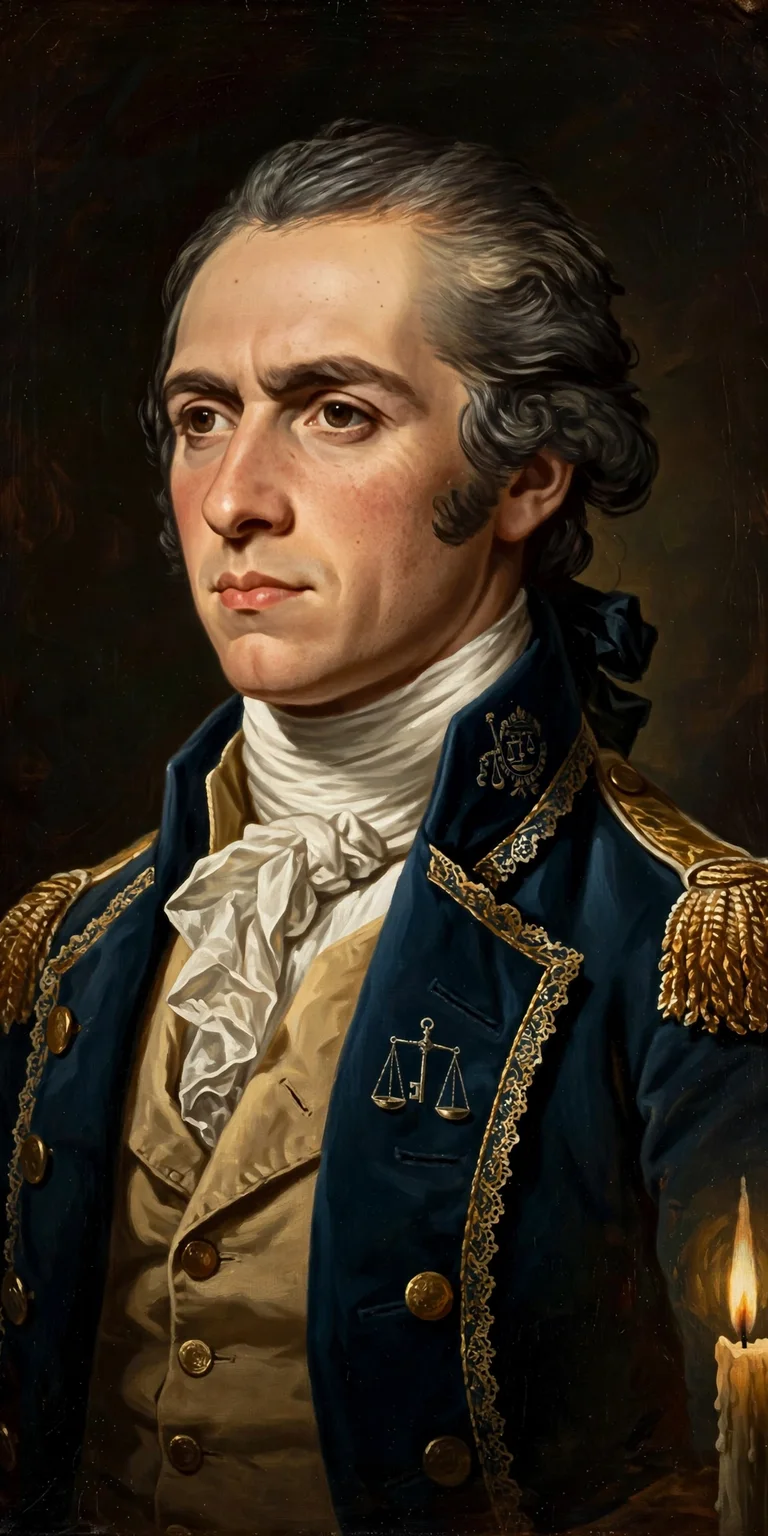
🖼️ HOUSE PAINTING — ALEXANDER HAMILTON · An original Eternity Visions™ painting honoring the man — not a copy of any period portrait.
LIFE IN BRIEF
Alexander Hamilton was born on the island of Nevis in the British West Indies — the year is given as 1755 in most modern accounts, and as 1757 in older ones — and was orphaned as a boy on St. Croix, where merchants who saw his talent raised funds to send him to school in America. He studied at King’s College (now Columbia) in New York, joined the patriot cause, and became Washington’s aide-de-camp in 1777. After the war he practiced law in New York, married Elizabeth Schuyler, sat in the Confederation Congress, and founded the Bank of New York. He served as the first Secretary of the Treasury, from 1789 to 1795. He was killed in a duel with Aaron Burr at Weehawken, New Jersey, on July 12, 1804.
ACCOMPLISHMENTS & DEEDS
Hamilton fought at Harlem Heights, Trenton, and Princeton, and led the assault on Redoubt No. 10 at Yorktown. At the Constitutional Convention he argued for a strong national government, and he drove the ratification fight in New York, writing the great majority of The Federalist essays. As Secretary of the Treasury he built the nation’s finances: funding the public debt, assuming state debts, and chartering the first Bank of the United States. He also handled transactions in enslaved people for his early employers and for his wife’s slaveholding family, though scholars still debate whether he held any enslaved person in his own household.
HIS HOPES FOR THE FUTURE
Hamilton opened The Federalist on October 27, 1787, by placing the American choice before the whole world, as a question this people had been reserved to decide:
“It has been frequently remarked that it seems to have been reserved to the people of this country, by their conduct and example, to decide the important question, whether societies of men are really capable or not of establishing good government from reflection and choice, or whether they are forever destined to depend for their political constitutions on accident and force.”
Source: The Federalist No. 1, 1787, verified at the Avalon Project, Yale Law School.
John Hancock (1737–1793)
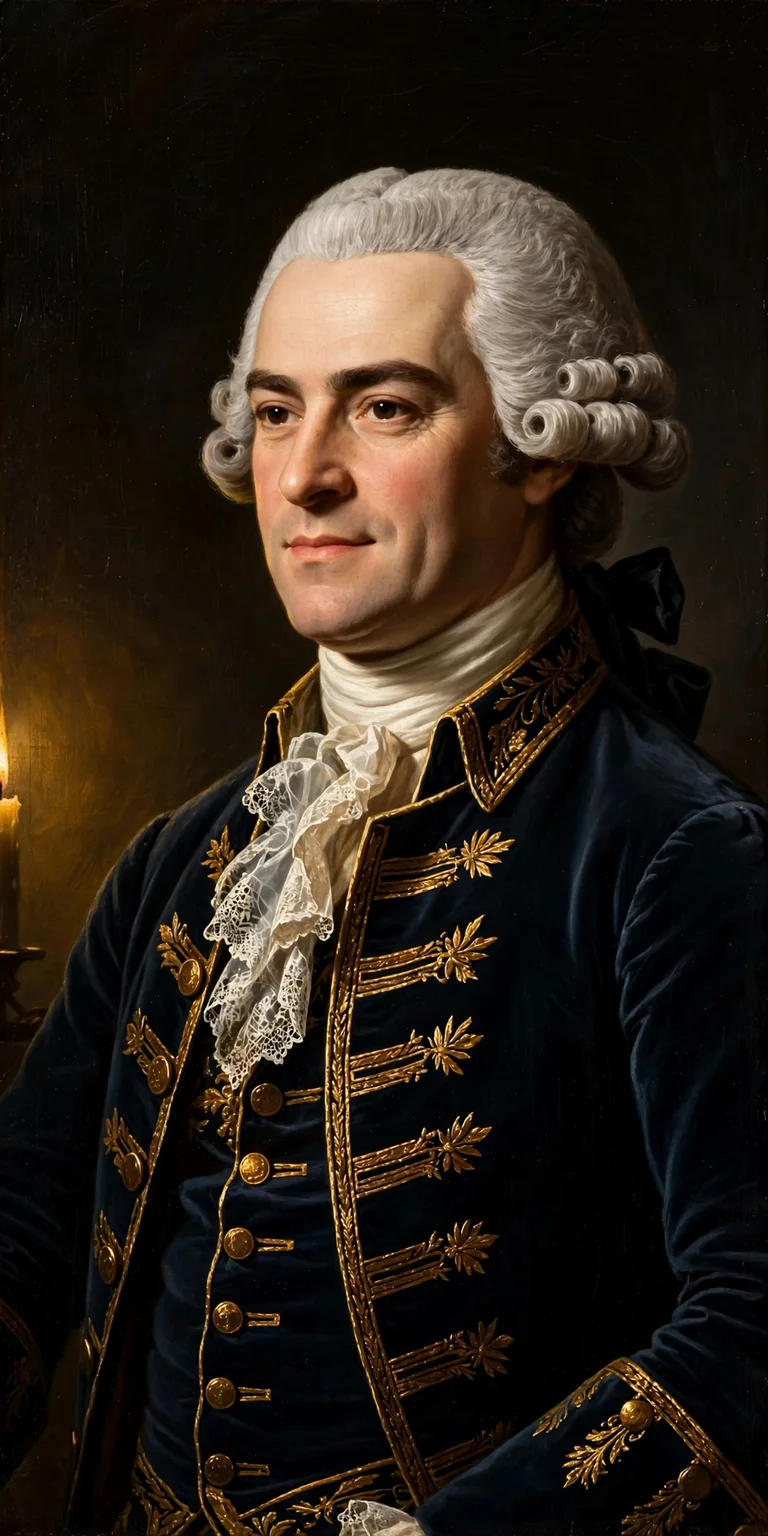
🖼️ HOUSE PAINTING — JOHN HANCOCK · An original Eternity Visions™ painting honoring the man — not a copy of any period portrait.
LIFE IN BRIEF
John Hancock was born on January 23, 1737, in Braintree (now Quincy), Massachusetts. After his father’s early death he was raised in Boston by his uncle Thomas Hancock, whose merchant fortune he inherited in 1764, becoming one of the richest men in the colonies. He entered Boston politics as a selectman and member of the Massachusetts House, and the British seizure of his sloop Liberty in 1768 made him a popular hero. He presided over the Massachusetts Provincial Congress and then over the Continental Congress, from 1775 to 1777. After the war he served as the first governor of Massachusetts for most of the years from 1780 until his death in Boston on October 8, 1793.
ACCOMPLISHMENTS & DEEDS
Hancock put his fortune at the Revolution’s service, funding patriot causes when money was scarce and hard to raise. As president of the Continental Congress he presided over the adoption of the Declaration of Independence, and his name stands first and largest upon it — which is why Americans still call a signature a “John Hancock.” He served briefly as a major general of Massachusetts militia, and as governor he helped steady his state through the hard postwar years and the unrest of Shays’ Rebellion. The record also shows that his great Boston household, like many wealthy households of his day, held enslaved people in his early years.
HIS HOPES FOR THE FUTURE
Writing to Washington in January 1776, with a hard summer of war ahead, Hancock stated the resolve he hoped America would keep, whatever it cost:
“We shall, doubtless, in this great struggle suffer much, but I trust no losses or sufferings will induce us to give over the defence of our liberty, and that cost what it may, we will persevere with unremitting vigour to maintain that inestimable jewel which we have received from our ancestors and transmit the same with unsullied lustre to our posterity.”
Source: John Hancock to George Washington, 6–21 January 1776, verified at Founders Online, National Archives.
Patrick Henry (1736–1799)
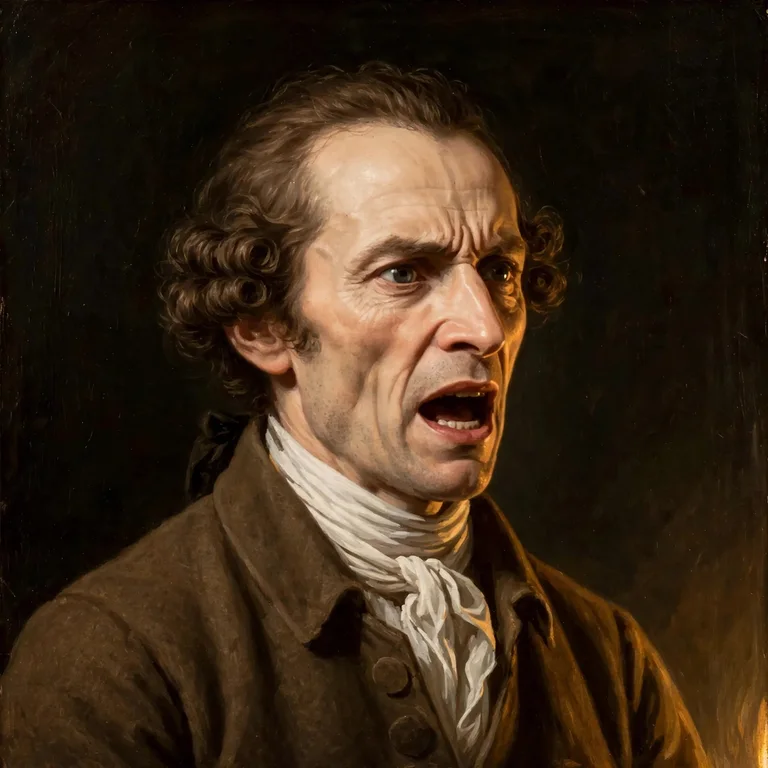
🖼️ HOUSE PAINTING — PATRICK HENRY · An original Eternity Visions™ painting honoring the man — not a copy of any period portrait.
LIFE IN BRIEF
Patrick Henry was born on May 29, 1736, in Hanover County, Virginia, the son of planter John Henry and Sarah Winston Henry. He failed as a storekeeper and farmer before reading law on his own and winning admission to the bar in 1760, where his plain, powerful speaking quickly made his name. Elected to the House of Burgesses in 1765, he became the fiery voice of colonial rights, and Virginia sent him to both Continental Congresses. In 1776 he became the first governor of the independent Commonwealth of Virginia, serving five terms in all across two periods of office. He died at his Red Hill plantation on June 6, 1799.
ACCOMPLISHMENTS & DEEDS
Henry’s Stamp Act Resolves of 1765 first declared that only Virginia’s own assembly could tax Virginians. At the Second Virginia Convention in March 1775 his resolutions put Virginia into a posture of defense and carried the colony toward war. As governor he sent George Rogers Clark west, whose campaigns secured the Old Northwest for America. He opposed ratifying the Constitution without a bill of rights, a stand that helped bring the first ten amendments into being. The plain truth must also be told: Henry held people in slavery throughout his life, even while writing that he could not justify it and wished for slavery’s end.
HIS HOPES FOR THE FUTURE
No written copy of Henry’s speech to the Second Virginia Convention on March 23, 1775 survives. The famous closing words below come from William Wirt’s reconstruction, published in 1817 in Sketches of the Life and Character of Patrick Henry, built from the recollections of men who heard him — they are given here as Wirt reconstructed them, not as a verbatim record of 1775:
“Is life so dear, or peace so sweet, as to be purchased at the price of chains and slavery? Forbid it, Almighty God! I know not what course others may take; but as for me, give me liberty or give me death!”
Source: Speech to the Second Virginia Convention, 23 March 1775, as reconstructed by William Wirt, 1817; reconstruction confirmed at the National Archives (Pieces of History, 2025).
Thomas Paine (1737–1809)
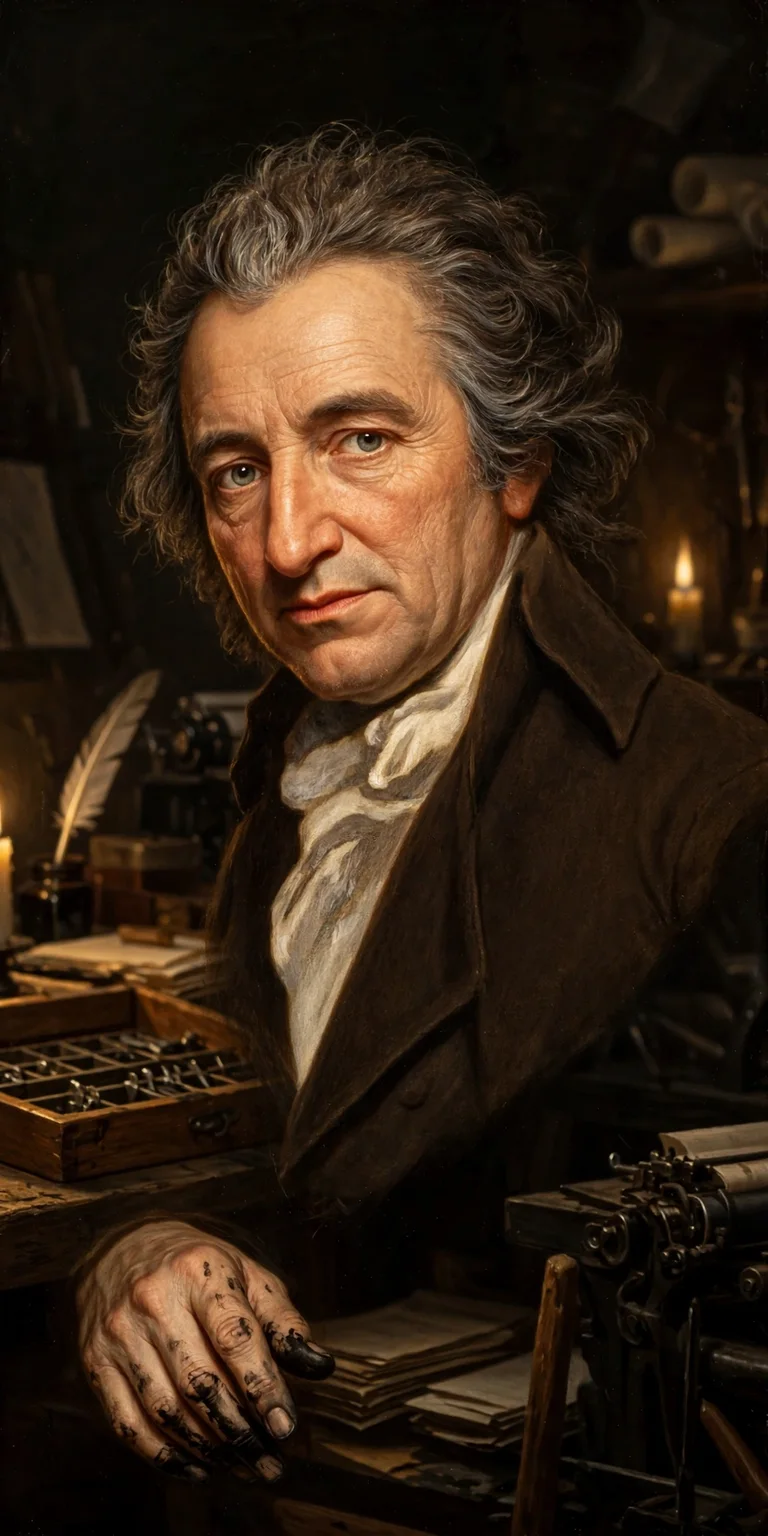
🖼️ HOUSE PAINTING — THOMAS PAINE · An original Eternity Visions™ painting honoring the man — not a copy of any period portrait.
LIFE IN BRIEF
Thomas Paine was born on February 9, 1737 (January 29 by the old calendar), in Thetford, England, the son of a Quaker staymaker. He left school at twelve, tried his father’s trade, the sea, and an excise office, and arrived in Philadelphia in November 1774 carrying a letter of introduction from Benjamin Franklin. He found work editing the Pennsylvania Magazine and in January 1776 published Common Sense. After the war he returned to England and France, wrote Rights of Man and The Age of Reason, and sat in the French National Convention, where he was imprisoned during the Terror. He came back to America in 1802 and died in New York City on June 8, 1809.
ACCOMPLISHMENTS & DEEDS
Common Sense, written in plain language any farmer could follow, sold well over one hundred thousand copies in its first months and turned colonial opinion toward independence more than any other single work. Paine followed it with The American Crisis papers, which Washington had read to his troops before Trenton. He gave his pamphlet profits to the cause, served as secretary to Congress’s committee on foreign affairs, and in Rights of Man answered Burke and defended the French Revolution to a vast English audience. From 1775 onward he also wrote against slavery, calling on America to end it — a stand ahead of most men honored in this company.
HIS HOPES FOR THE FUTURE
Near the close of Common Sense, in 1776, Paine told Americans what lay in their hands — nothing less than a fresh beginning for the world:
“We have every opportunity and every encouragement before us, to form the noblest, purest constitution on the face of the earth. We have it in our power to begin the world over again.”
Source: Common Sense, 1776, verified at the National Constitution Center (primary source text).
Samuel Adams (1722–1803)
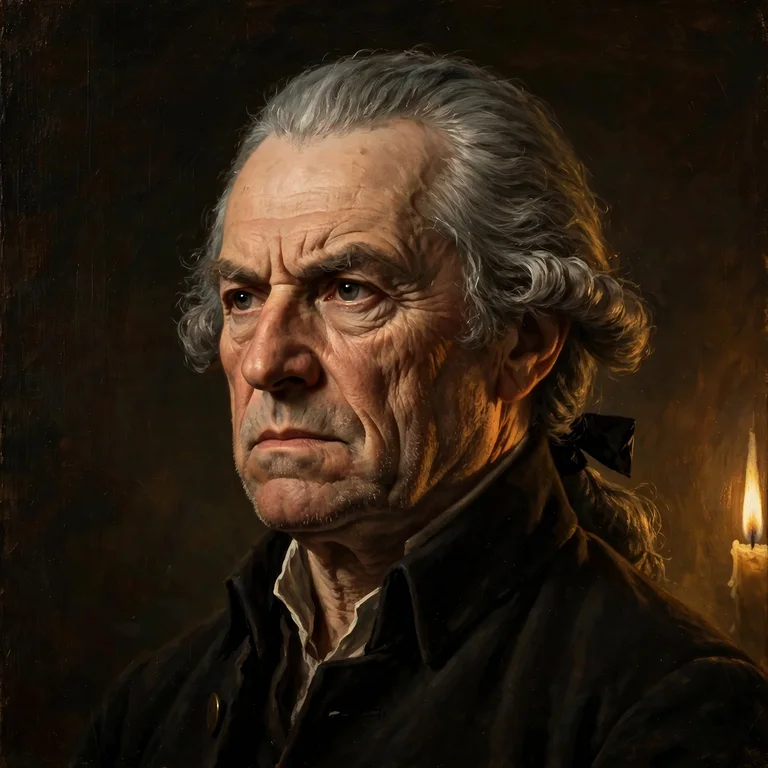
🖼️ HOUSE PAINTING — SAMUEL ADAMS · An original Eternity Visions™ painting honoring the man — not a copy of any period portrait.
LIFE IN BRIEF
Samuel Adams was born on September 27, 1722, in Boston, Massachusetts, the son of a prosperous maltster and deacon. He graduated from Harvard College in 1740 and tried business and tax collecting without success — organizing, not money, was his gift. As clerk of the Massachusetts House and a leader of Boston’s town meetings and committees of correspondence, he became the Revolution’s great organizer. Massachusetts sent him to both Continental Congresses, and he signed the Declaration of Independence and the Articles of Confederation. After the war he served as president of the Massachusetts Senate, as lieutenant governor, and as governor of Massachusetts, from 1794 to 1797. He died in Boston on October 2, 1803.
ACCOMPLISHMENTS & DEEDS
Adams built the machinery of resistance: the Boston committee of correspondence of 1772, copied across the colonies, bound thirteen separate colonies into one cause before they had one government. His Circular Letter of 1768 rallied colonial assemblies against the Townshend duties, and his pen, under many pseudonyms, kept the case for liberty before the public for a decade. In Congress he pressed steadily for independence and signed its Declaration. When an enslaved woman named Surry was given to his household, he refused to hold her as property and insisted her freedom be put in writing — his own stand against the age’s great wrong.
HIS HOPES FOR THE FUTURE
In April 1801, an old man writing to the new President, his friend Thomas Jefferson, Adams looked beyond America’s own shores for the future he hoped to see:
“Providence, who rules the World, seems now to be rapidly changing the sentiments of Mankind in Europe, and America: May Heaven grant, that the principles of Liberty and virtue, truth and justice may pervade the whole Earth.”
Source: Samuel Adams to Thomas Jefferson, 24 April 1801, verified at Founders Online, National Archives.
John Jay (1745–1829)
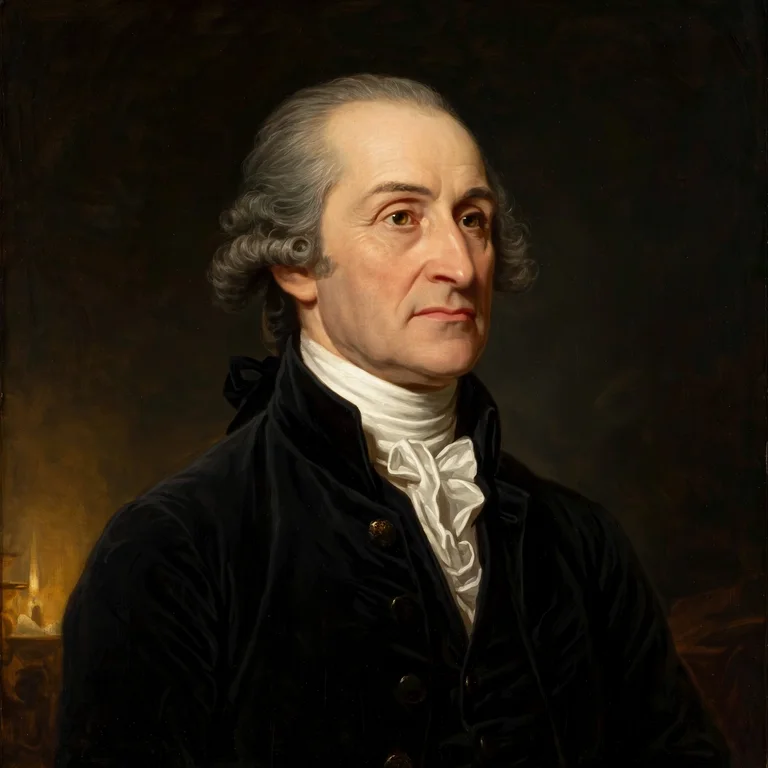
🖼️ HOUSE PAINTING — JOHN JAY · An original Eternity Visions™ painting honoring the man — not a copy of any period portrait.
LIFE IN BRIEF
John Jay was born on December 12, 1745, in New York City, the son of merchant Peter Jay and Mary Van Cortlandt Jay, and grew up at Rye in Westchester County. He graduated from King’s College (now Columbia) in 1764 and built a leading law practice. New York sent him to both Continental Congresses, and he presided over Congress in 1778 and 1779. He then served as minister to Spain, helped negotiate the peace with Britain, and became Secretary for Foreign Affairs. In 1789 Washington appointed him the first Chief Justice of the United States, and in 1795 he became governor of New York. He died at Bedford, New York, on May 17, 1829.
ACCOMPLISHMENTS & DEEDS
Jay drafted New York’s first constitution in 1777 and served as its first chief justice. As a peace commissioner he helped win the Treaty of Paris of 1783 on terms generous to the new nation. He wrote five of The Federalist essays, including No. 2, and an Address to the People of New York that helped carry ratification there. As the first Chief Justice he set the Supreme Court’s early course, and his 1794 treaty with Britain kept a fragile peace. The honest record adds this: Jay held enslaved people even while working, as president of New York’s manumission society, to end slavery by law, which his state began doing in 1799.
HIS HOPES FOR THE FUTURE
In The Federalist No. 2, published October 31, 1787, Jay grounded his hope for America in the Union the people had already made, and meant to keep:
“It has until lately been a received and uncontradicted opinion that the prosperity of the people of America depended on their continuing firmly united. A strong sense of the value and blessings of union induced the people, at a very early period, to institute a federal government to preserve and perpetuate it.”
Source: The Federalist No. 2, 1787, verified at the American Presidency Project (full text of The Federalist).
John Marshall (1755–1835)
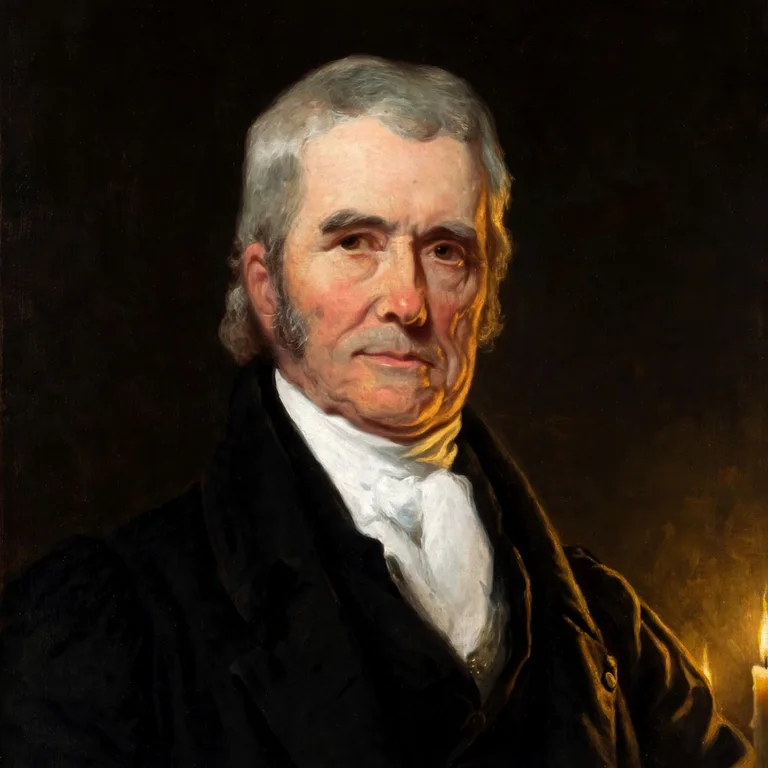
🖼️ HOUSE PAINTING — JOHN MARSHALL · An original Eternity Visions™ painting honoring the man — not a copy of any period portrait.
LIFE IN BRIEF
John Marshall was born on September 24, 1755, near Germantown in Fauquier County, Virginia, the eldest son of planter Thomas Marshall and Mary Randolph Keith Marshall. He served as an officer in the Continental Army, enduring Valley Forge, then read law briefly at the College of William and Mary and built a leading Virginia practice. He sat in the Virginia legislature and in the United States House of Representatives, served as Secretary of State under John Adams, and in 1801 became the fourth Chief Justice of the United States. He held that office for more than thirty-four years, until his death in Philadelphia on July 6, 1835.
ACCOMPLISHMENTS & DEEDS
Marshall’s opinions made the Supreme Court a co-equal branch and the Constitution a working frame of government. In Marbury v. Madison (1803) the Court, in his words, claimed the duty to declare acts of Congress void when they conflict with the Constitution. In McCulloch v. Maryland (1819) he upheld Congress’s implied powers and the supremacy of federal law, and in Gibbons v. Ogden (1824) he read federal commerce power broadly. Nearly all his great opinions spoke for a unanimous Court. The true record also stands: Marshall held enslaved people throughout his life, buying and selling human beings even as he spoke for liberty under law.
HIS HOPES FOR THE FUTURE
Writing for a unanimous Court in McCulloch v. Maryland in 1819, Marshall stated his hope for the Constitution itself — that it was made to last, and to meet whatever came:
“We must never forget that it is a constitution we are expounding — a constitution intended to endure for ages to come, and, consequently, to be adapted to the various crises of human affairs.”
Source: McCulloch v. Maryland, 17 U.S. 316, 1819, verified at the Legal Information Institute, Cornell Law School (Constitution Annotated).
MYTH-CHECKS AT THIS TABLE
MYTH-CHECK — THE CHERRY TREE: Young Washington never chopped a cherry tree and confessed “I cannot tell a lie.” The story was invented by biographer Mason Locke (“Parson”) Weems and first appeared in the fifth edition (1806) of his Life of Washington, years after Washington’s death, with no contemporary evidence — a parable about honesty that is itself a fabrication. It is retold here only as a legend, labeled.
MYTH-CHECK — WASHINGTON’S WOODEN TEETH: Washington’s dentures were not wood. Surviving sets — including the ones at Mount Vernon — are made of ivory, human and animal teeth, lead, and metal springs and screws. The wooden-teeth picture comes from the grain of stained ivory in old age pictures; the record here is the artifact itself.